



From $6 to $38 Million: The Real Cost of OEM’s Locking Down Repair Rights
Secretary of the U.S Army Daniel P. Driscoll has brought an uncomfortable defence reality into the open: too many platforms’ availability is being compromised, not because they cannot be repaired, but because the user does not always have the data, tools, permissions or technical pathway to repair them. Testifying at the House hearing on the 15th May, the U.S. Army secretary made clear that right to repair is now being treated as a maintenance, cost and readiness issue. The Army’s FY27 posture statement says it is advocating for a Right to Repair policy to reduce delays and costs associated with equipment maintenance, while also reviewing contract-writing processes to maximise flexibility for the Army.
Secretary Driscoll’s testimony brought the issue into sharp focus. He described a long-running Black Hawk sustainment problem where a simple cockpit control knob, reportedly costing around $6 and taking about an hour to 3D print, has been grounding helicopters around four times a month for nearly two decades. Because the Army has not had access to the part or the intellectual property needed to produce it internally, the workaround has been to replace the wider system at around $40,000 each time. On that basis, American taxpayers have paid approximately $38.4 million over 20 years for a problem that should have been resolved at the component level. This is a clear example of how restricted repair access can turn a simple technical fault into a recurring readiness, cost and availability problem. It also explains why Right to Repair is now being pushed into the NDAA as a matter of military effectiveness, not just commercial reform.
Modern platforms are now dense electronic ecosystems. Flight controls, displays, power modules, sensors, communications, radar, defensive aids, test equipment and mission systems all depend on circuit boards and embedded electronics operating reliably over decades. As these assemblies age, the problem is rarely a single binary event where a board suddenly “dies”. More often, performance degrades gradually. Capacitors dry out. Precision resistors drift. MOSFETs weaken after repeated thermal and electrical stress. Solder joints fatigue. Connectors oxidise. Semiconductor leakage increases. Clock stability deteriorates. Analogue conditioning circuits move outside tolerance. If those trends are not measured early, failure appears sudden. In reality, the evidence was often already there.
This is where repairability must mature beyond access to spare parts. Defence organisations need the ability to diagnose at the component level, capture degradation data, compare signatures over time, reconstruct missing circuit knowledge, and build predictive maintenance models around electronic behaviour. Mechanical degradation is already well understood in most fleets. Electronic degradation still remains far too reactive.

The ABI and UK MoD work provides a strong contrast. By using ABI’s BoardMaster for component-level diagnostics and RevEng for reverse engineering, MoD teams have recovered high-value electronic assets in-house, avoided costly redesign routes, and strengthened long-term obsolescence management. The published MoD case study describes cost reductions of 94 to 99 per cent against traditional replacement strategies, with savings running into the millions while preserving operational availability.
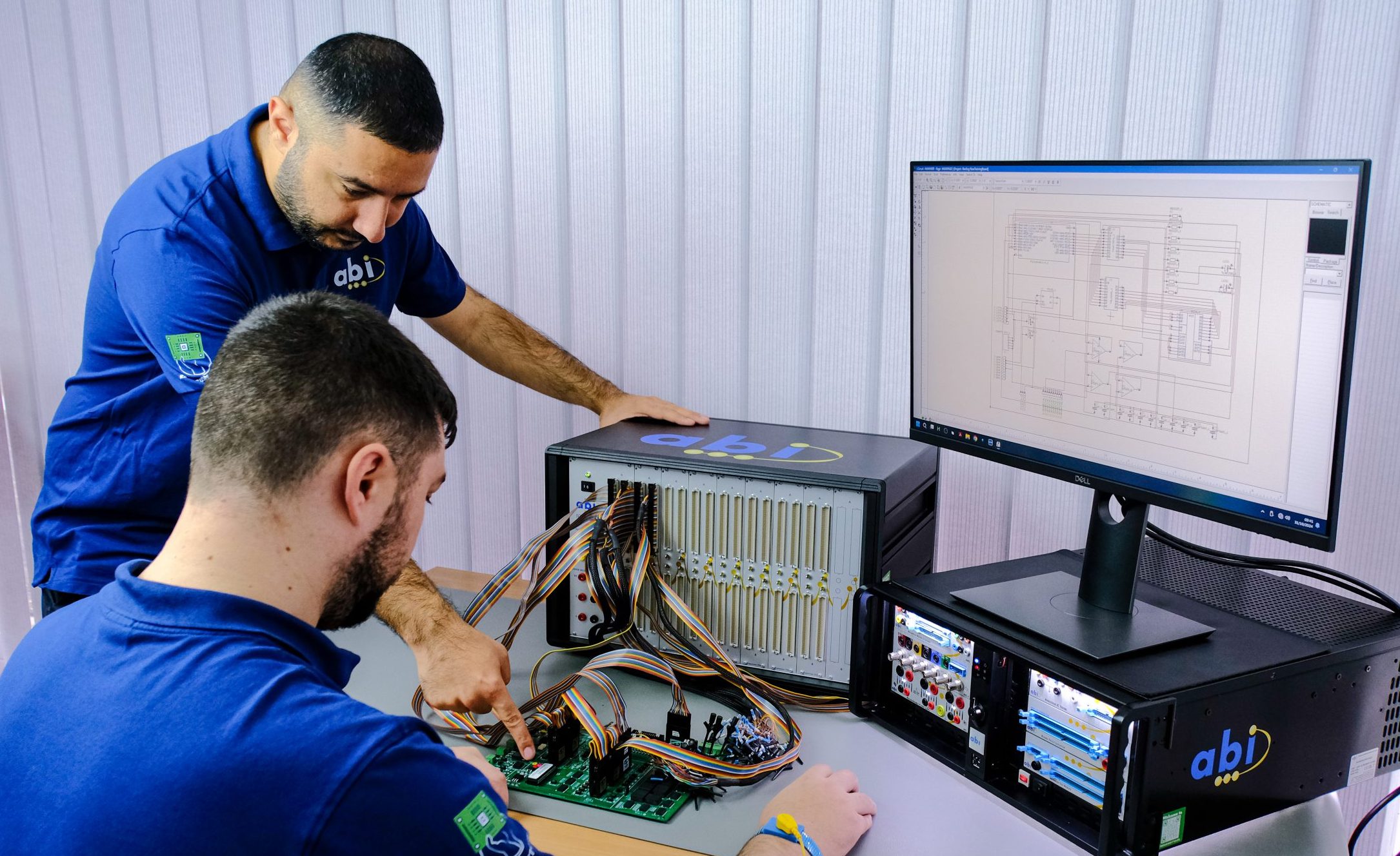
The wider value is greater than the repair itself. When technical data is rebuilt, test procedures are created, and component behaviour is documented, the organisation gains repeatable knowledge. That knowledge can be used for preventive repair, training, future fault isolation and better decisions on redesign versus sustainment. Across recovered assets, avoided redesign activity and retained operational value, this is the kind of work that can move into the £100 million class of value retention and cost avoidance.
The geopolitical context only strengthens the case. Conflict in the Middle East is already disrupting trade corridors, with Maersk warning that regional conflict is affecting major land, sea and air routes beyond the immediate theatre. Oliver Wyman has also highlighted disruption across energy, commodities and transportation, all of which feed into defence supply chains, manufacturing cost, spares availability and logistics planning. In that environment, waiting for replacement is a vulnerability. Waiting for overseas support is a vulnerability. Scrapping recoverable electronics because documentation is missing is a vulnerability. This applies well beyond defence. Aerospace MRO, rail, energy, automotive manufacturing and semiconductor production all rely on electronics that increasingly outlive supplier support. The same technical pressures apply: obsolete components, missing drawings, ageing PCBs, long lead times, rising equipment costs and limited in-house diagnostic depth.
The next phase of sustainment will belong to organisations that treat repair as an engineering discipline, not a workshop fallback. Right to repair gives the legal and contractual permission. Component-level diagnostics, reverse engineering and degradation analysis create the practical capability. Secretary Driscoll is right to push the issue. But the operational lesson is broader: repairability must be designed, contracted, trained, measured and executed. For critical systems, the ability to recover electronics in-house delivers readiness, resilience and lifecycle control.
Beyond Defence Application
While this partnership is established in defence applications, the implications extend to other critical industries facing similar challenges. Energy infrastructure, rail networks, semiconductor manufacturing, and advanced automotive systems are all increasingly dependent on legacy electronic assemblies operating beyond their original operational life. The pressures of obsolescence, documentation loss, and supply chain delays are universal, and the ABI/MoD model demonstrates that in-house diagnostics, supported by reverse engineering and predictive analytics, can unlock drastic lifecycle extensions and cost saving advantages.
In today’s market, electronic sustainment should not be a technical afterthought but a pillar of operational sovereignty. The partnership between ABI Electronics and the UK Ministry of Defence proves that with the right tools, expertise, and leadership, even the most complex legacy electronics can be recovered, maintained, and protected for decades to come. For programme managers and engineers facing the mounting pressures of obsolesacence, this is compelling evidence that provides a golden opportunity for a major strategic overhaul.