

Protecting Healthcare Value with an Efficient and Focused Repair Strategy
Medical equipment repair and PCB diagnostics are transforming how healthcare organisations protect value. A defibrillator that is ready when needed, a ventilator that returns to service quickly, or an infusion pump that avoids unnecessary replacement can make a real difference to hospitals, EMS teams, clinics and patients. That is why the work being carried out by ReNew Biomedical in Jackson, Tennessee deserves attention.
Founded in 2014, ReNew Biomedical has grown into a respected medical equipment service and repair organisation supporting EMS, clinics and healthcare providers across the United States. The company services and repairs a wide range of life-supporting equipment, including defibrillators, ventilators, infusion pumps, AEDs, ECG/EKG systems, vital signs monitors, compression devices and oxygen concentrators. As an Independent Service Organisation, ReNew offers a certified alternative to OEM servicing, often with faster turnaround times and lower costs.
A repair culture built around critical equipment
Medical technology repair is not ordinary electronics repair. The equipment is regulated, the end users are time-sensitive, and the consequences of failure are serious. These are devices used in emergency response and every repair must be safe, traceable and properly validated. ReNew Biomedical has built strong credentials in this space. The company is ISO 13485 certified for its quality management system covering medical device handling and service. Its technicians and BMETs include CABT-certified staff, a strong concentration of CBET-certified technicians and Journeyman technicians.
ReNew also states that its OEM partners provide factory training and certification, with many OEMs partnering with ReNew as an Authorised Service Center. That combination matters. In a sector where some equipment providers still see independent repair as a threat, ReNew is proving that quality repair, documentation, technician development and patient-ready outcomes can work together.
Why medical equipment repair with PCB diagnostics made sense
As medical equipment becomes more electronically complex, the challenge moves deeper inside the device. The fault is often no longer a cable, battery, connector or mechanical part. It may sit on a circuit board, hidden in a power supply stage, digital control section, driver circuit, display interface, communication path or sensor-processing area. For many healthcare providers and repair organisations, that is where replacement culture begins. A board fails, documentation is limited, the OEM route is expensive, and the fastest option often becomes full board replacement.
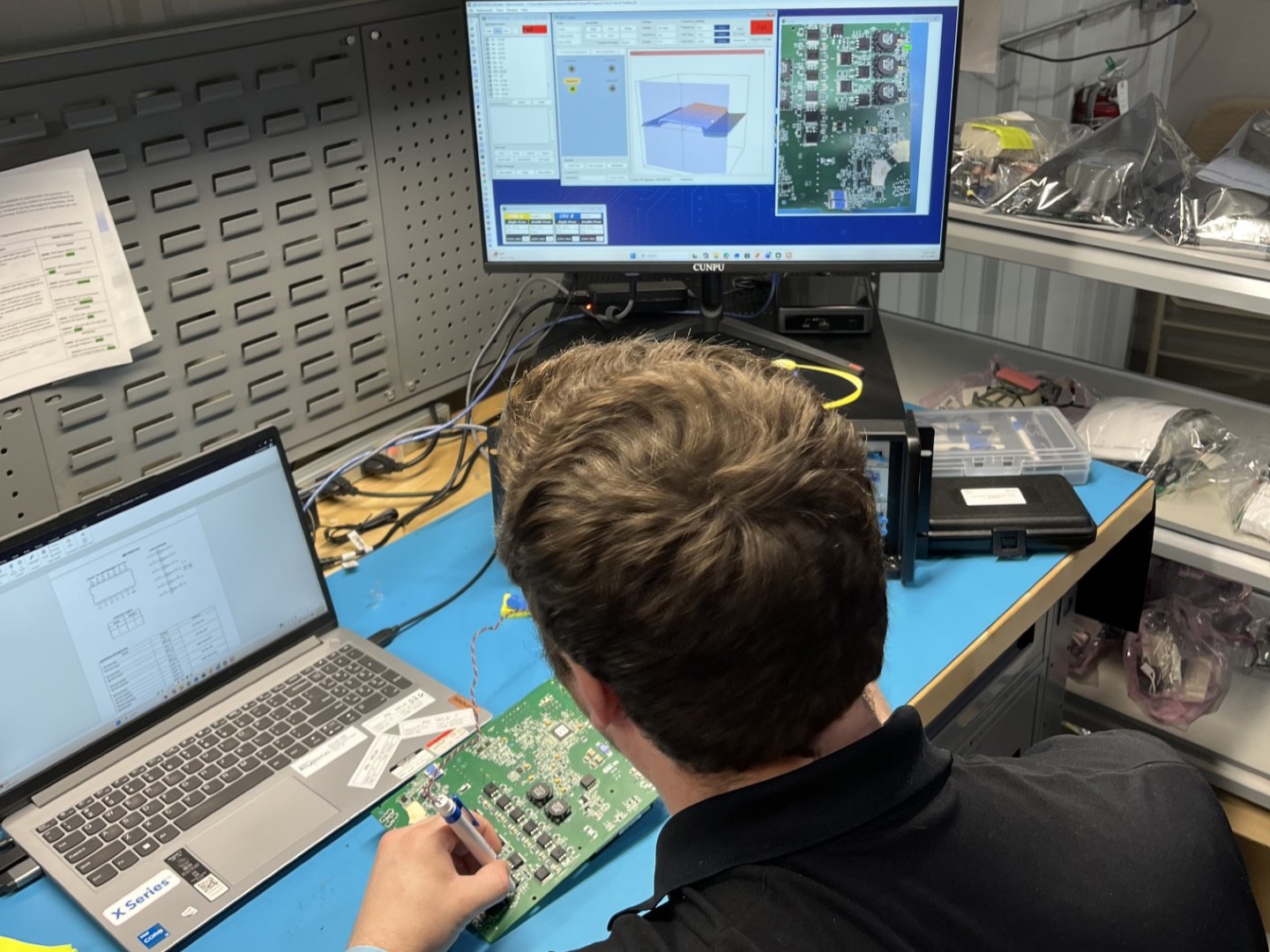
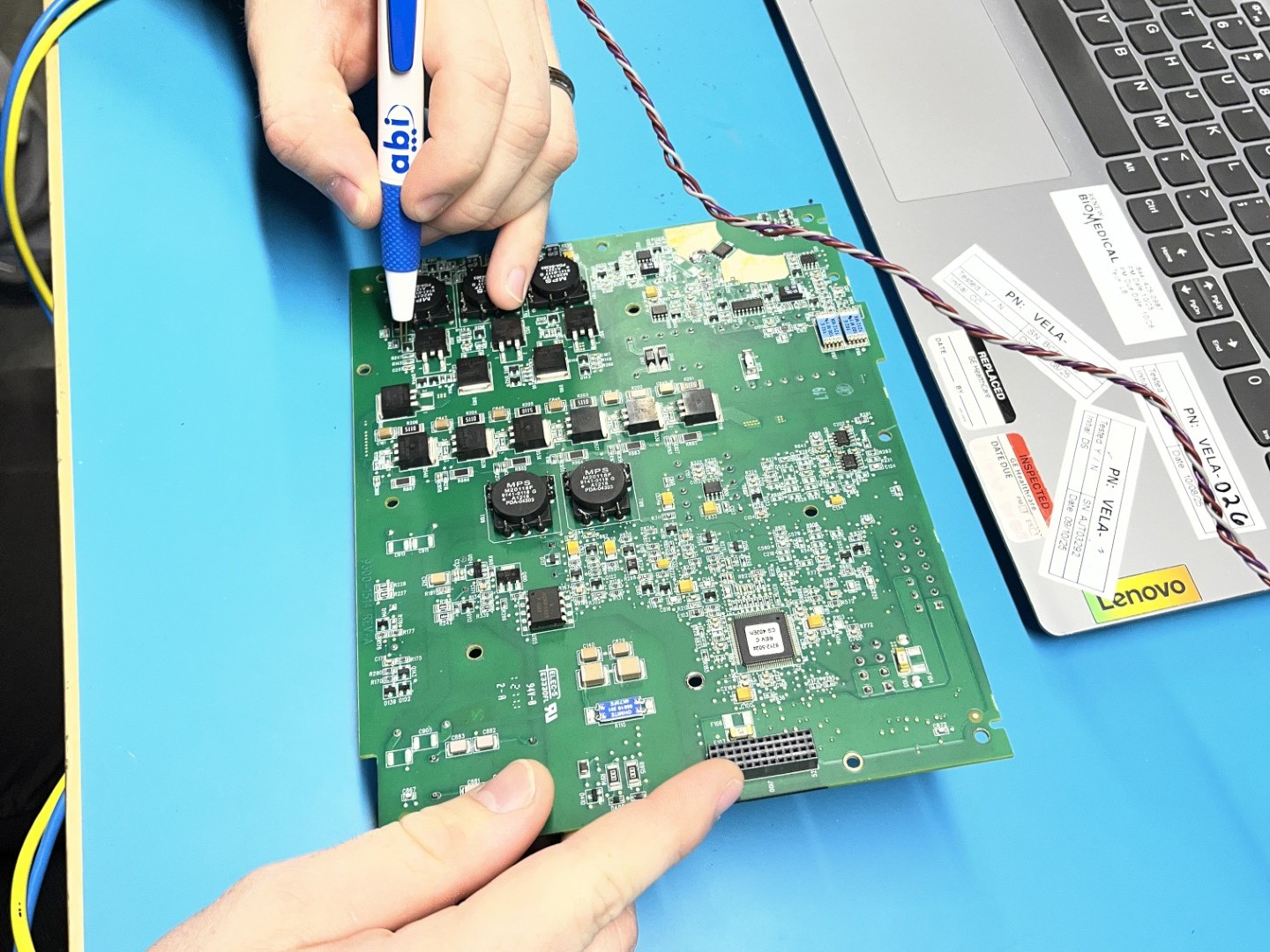
ReNew Biomedical chose a different route. By investing in ABI’s BoardMaster, ReNew created a deeper in-house capability for PCB-level diagnostics, repair and repeatable fault-finding. The BoardMaster gives technicians the ability to test electronic assemblies at component level, build structured TestFlows, compare boards, validate known-good behaviour and create repair knowledge that remains inside the organisation. This is especially valuable when the same boards appear across multiple device revisions, or when commonly replaced circuit boards start to become a recurring cost centre.
Joshua Weatherford, CBET and Biomedical Manager at ReNew Biomedical, confirmed that the team is already “enjoying the fruits of the BoardMaster” and has mapped many of its most commonly replaced circuit boards, including several revisions of each board. That feedback is important because it shows the transition from one-off repair to structured capability building. Once a board has been mapped, tested and documented, the next repair becomes faster. The organisation is no longer starting from zero every time. It is building its own technical intelligence.
The result: over $100,000 in recovered value
The early results have been strong. ReNew’s BoardMaster user Lukas Brooks recently commented that the company recovered the investment in less than six months, with more than $100,000 in value recovered through the use of the ABI diagnostic system. That is not just a financial return. It represents medical electronics that did not have to be discarded, boards that did not need to be replaced unnecessarily, and repair knowledge that now remains inside ReNew Biomedical.
Why people matter more than job titles
One of the most important parts of this story is the person chosen to drive the BoardMaster internally. Lukas Brooks is a Biomedical Equipment Technician at ReNew Biomedical and holds CBET certification. His profile highlights biomedical electronics as a top skill, alongside a background that includes healthcare administration, sales, field work and people management.
On paper, that may not be the most conventional route into advanced PCB diagnostics. In practice, it may be exactly why it worked. The best repair technicians are not always the people with the longest list of formal engineering qualifications. They are often the people with curiosity, discipline, patience and the willingness to keep pushing until the fault makes sense. BoardMaster rewards that type of person. It gives structure to curiosity. It turns methodical testing into repeatable knowledge. It helps a technician move beyond “this board has failed” and towards “this section behaves differently, this component is suspect, this test confirms the repair.”
Joshua Weatherford’s role in recognising that potential should not be overlooked. Joshua’s own background combines equipment repair, biomedical devices and a strong mechanical foundation from his earlier experience as an automotive technician. His profile describes him as a driven individual who loves the biomedical industry and wants to be part of the changes taking place and that is exactly the leadership profile needed for successful technology adoption: practical, open-minded and willing to back the right person.
Leadership that enables change
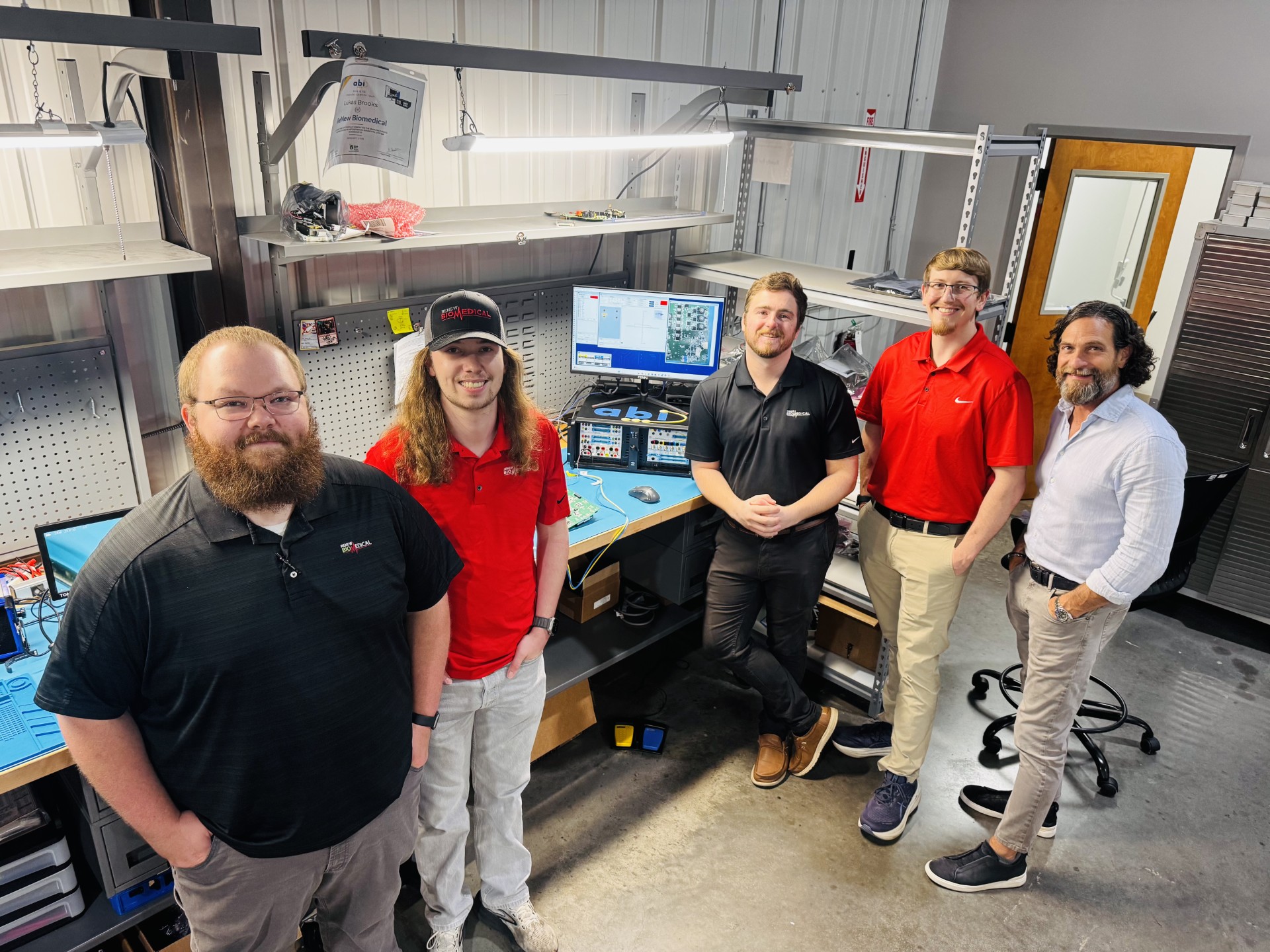
Behind this progress is the wider leadership of Mark Taylor, President and Co-Owner of ReNew Biomedical. His company has invested in technician development through the ReNew Biomedical Training Academy, which was created to train the next generation of Healthcare Technology Managers and biomedical technicians. ReNew states that since launching its inaugural class in 2021, the programme has graduated 51 CABTs and 12 CBETs.
This is where ReNew’s story becomes bigger than one equipment purchase. The BoardMaster investment sits within a wider culture of training, capability development and Right to Repair advocacy. It supports a business model that values skilled technicians, documented processes and better outcomes for healthcare providers.
A model for other critical sectors
Although this story is rooted in biomedical engineering, the message applies far beyond healthcare. Defence, aerospace, rail, energy, semiconductor manufacturing, automotive production and industrial automation all face the same core challenge: critical systems are becoming more electronic, more software-driven and more exposed to obsolescence. In each sector, organisations are asking the same questions: How do we keep equipment running when OEM support disappears? How do we reduce cost without compromising safety? How do we retain technical knowledge internally?
ReNew Biomedical provides a compelling answer. Start with the right mindset. Choose the right people. Give them the right diagnostic tools. Train them properly. Document the process. Build capability one board at a time.